
Why Your Team Needs a Field Service Management App
-
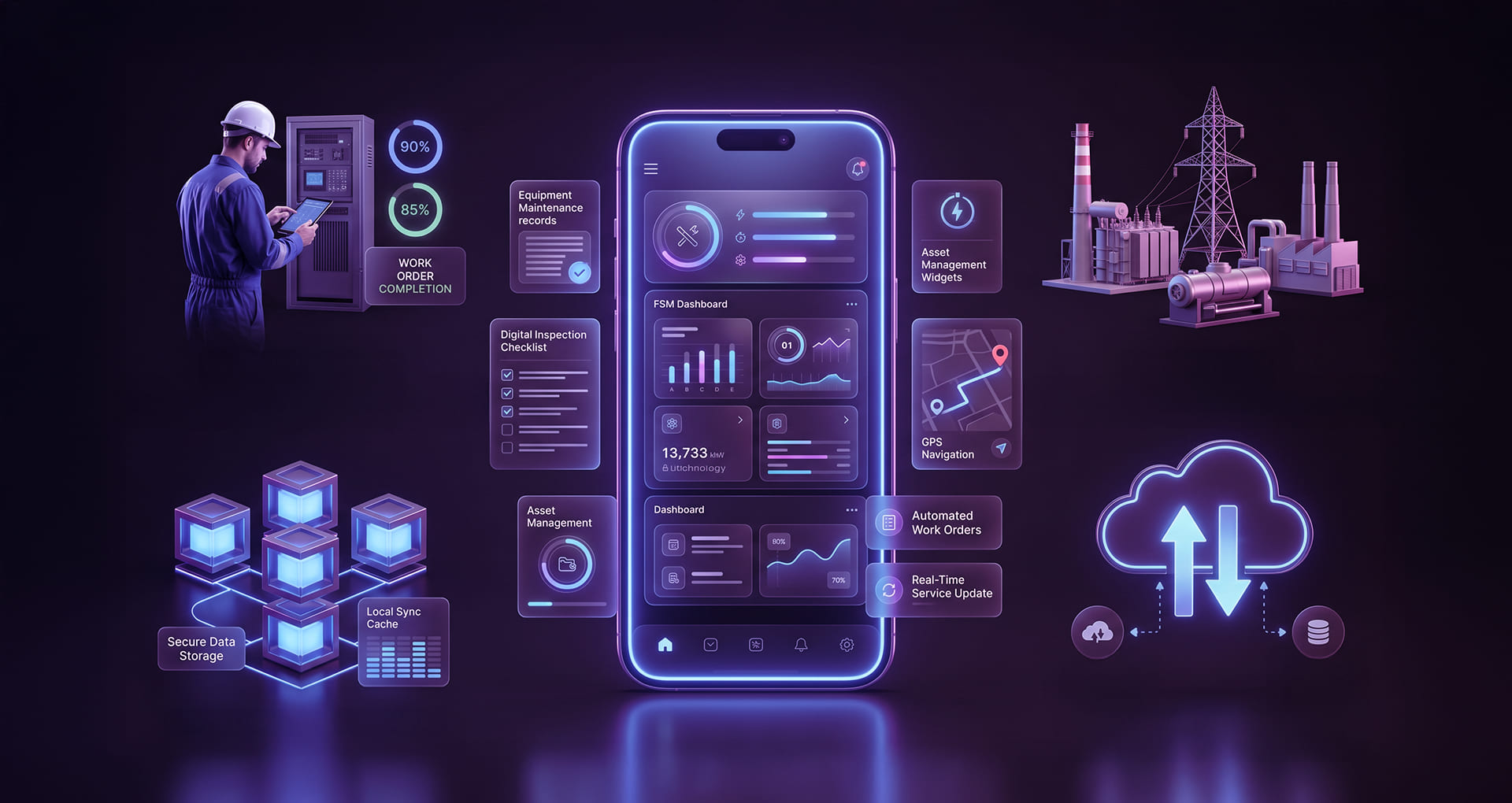
Summary: A field service management app helps teams stay connected, organized, and productive while working in the field. By providing real-time access to job information, inventory, client details, and updates, businesses can reduce delays, improve communication, streamline operations, and deliver a more consistent customer experience.
Coordination is essential for field service businesses. From installations and repairs to maintenance work or project-based jobs, no matter what kind of field work your team does, the success of a job often relies on information flow from in-office employees to field service workers.
For most businesses, that knowledge is still communicated through phone calls, text messages, paper documents, spreadsheets, or via various disconnected systems. Although these approaches may seem reasonable at the onset, they are often inefficient and become increasingly apparent as workloads grow and operations scale.
Missed updates, old job information with delayed response, and the administrative bottlenecks can impact productivity as well as customer satisfaction.
A field service management app improves these challenges by keeping the information office teams and field crews need in sync and easily accessible, anytime, anywhere. This removes the need for manual communication and siloed processes, leading the way to a more connected, efficient manner of working in businesses.
This is why a field service management app has become an indispensable tool in this day and age of service business.
Enhanced Data Connectivity Between Office and Field Teams
Service operations can break down immediately due to missed communications.
Crucial information could be delayed, missed, or misinterpreted if field employees and office staff depend on different communication channels. This can result in scheduled appointments overlapping, missing work, and excessive scrambling to exchange information back and forth.
An app for managing field services creates a common ground where the updates can be entered and checked instantly.
Field teams are able to enter job statuses in the app; thus, this omits extensive phone calls to update people. This information can then be seen immediately by office staff who will be able to make decisions based on updated data.
The communication process is streamlined, which in turn helps reduce misunderstandings and improve coordination across the business.
Faster Decision-Making
Field operations are constantly changing.
Schedules change, client requests change, inventory needs shift, and new problems present themselves on-site. Companies that depend on outdated information face challenges in agility.
A field service management app provides real-time visibility on in-progress work, enabling teams to make quicker and more informed decisions.
Managers can keep tabs on job progress, scope creep, and make resource adjustments when needed. As information is current as progress and actions occur, it means that decision-makers no longer have to bet on end-of-day reports or manual status updates.
With quick access to the information they need, users can develop higher operational agility and keep on moving through their workday.
Better Inventory Visibility
Inventory management in field service organisations goes hand-in-hand with other day-to-day operations for most.
Technicians require access to the appropriate materials, tools, and equipment to get their work done within the bounds of due efficiency. Having poor inventory data leads to delayed projects due to stock shortages or finding the wrong product.
A field service management app connects these two spheres, i.e., inventory and field operations.
Inventory is just one of the concepts teams can utilize during job planning or execution to ensure resources are present when they are needed.
Improved visibility allows businesses to:
- Monitor stock availability
- Track inventory usage
- Allocate inventory to jobs
- Reduce material-related delays
By linking inventory information to job workflows, teams are able to tap into the efficiency of resource allocation, while avoiding unnecessary disruptions.
Reduced Administrative Work
Administrative tasks take up more time than most service businesses think.
Updating spreadsheets, filling out forms, entering data manually, and having to monitor job details across several systems can impose a heavy workload on field staff or those in the office.
Field service management software cuts down on this process by keeping everything in one database and removing duplicate input of information.
You can update jobs, make notes, and use it for inventory data and customer information. This leads to less manual recordkeeping, thus ensuring that the information is accurate and accessible.
Less waste time on paperwork means more time for customers and revenue-focused activities.
Enhanced Customer Experience
Customers expect a high level of professionalism and communication, as well as the ability to execute.
With teams receiving the information they need at their fingertips, that becomes much more manageable.
By having easy access to customer records, job history, and site details, a field service management app facilitates employees in delivering excellent services. An integrated business: Teams come into calls well-informed, with much better responses to customer questions and messaging consistency throughout.
Customers often receive improved response times as a result of operating efficiently and with increased visibility.
Great customer experiences last long, repeat, and refer.
Supporting Business Growth
With growth comes opportunities, but it also creates complexity.
When a business adds more jobs, expands its service area, or increases the size of the team, it becomes harder to manage manual processes. What once served a small operation might not be able to scale for an expanding organization.
To scale efficiently, use a field service management app that provides the structure you need.
With information centralised and workflows standardised, businesses can retain consistency as operations grow in complexity. Keeps teams connected, organizes information, and provides better visibility for managers over day-to-day performance.
The key to orderly operations as businesses grow is unsurpassed efficiency and service quality.
Mobile Access: Why It's More Relevant Than Ever
The modern field teams are seldom in one place for long.
Whether it be moving between job sites, juggling multiple projects, or responding to an urgent service request, employees require access to information whenever and wherever work takes them.
That means a field service management app takes key data directly to the people who need it most. By removing this need, you enable an even more responsive and more connected workforce free from delays due to inaccessibility.
Nevertheless, in an industry where efficiency and communication are directly related to performance, mobile access has partnered with the success of field operations as a critical component.
Conclusion
Field service management apps are not merely a convenience for businesses; they help organizations improve communication, enhance visibility, automate administrative tasks, and enable better decision-making across the entire enterprise.
More efficient operations and a stronger customer experience. Businesses can connect office staff, field teams, inventory, jobs, and customer information in one platform.
Is there a better way to connect your field teams and keep them organized? SilkRoad provides modern trades businesses with a central hub to easily manage jobs, inventory, estimates, and client information on one platform built to drive productivity in the field and workflow expansion inside the office.
FAQs
1. What is basically a field service management app?
It’s a mobile-enabled platform that helps businesses run jobs, track inventory, keep customer information together, handle scheduling, and coordinate field operations from one centralized place, more or less.
2. How does a field service management app improve communication?
It gives real-time access to job updates and operational details, so office people and field teams can stay in the same loop during the entire workday, not just at the end.
3. Can field service management apps help reduce paperwork?
Yes, definitely. These apps move information into digital form, which cuts down on manual recordkeeping, reduces duplicate data entry, and avoids paper-based routines.
4. Why is mobile access important for field service teams?
Mobile access lets technicians and crews see job specifics, report progress on the spot, review customer data, and stay connected while they’re working on site.
5. How can a field service management app support business growth?
By making things more organized, standardizing workflows, and giving better operational visibility, a field service management app makes it easier to handle bigger workloads as the business expands.


