Categories
Tags
Archives
The Rise of Advanced Sheet Metal Fabrication Companies in Bang
-
The Rise of Advanced Sheet Metal Fabrication Companies in Bangalore
 The transformation of Bangalore from a digital service hub to a sophisticated manufacturing nerve center is one of the most significant industrial shifts in recent years. Beyond the tech parks, the city has cultivated a world-class ecosystem for precision engineering that rivals global standards. This evolution has triggered a massive spike in demand for top-tier sheet metal fabrication companies in Bangalore, making reliable manufacturers like Zeometrix the essential backbone for the aerospace, EV, and electronics sectors.
From the intricate chassis of a high-end server to the heavy-duty brackets used in aerospace, sheet metal fabrication is the foundational process that brings modern technology to life. In this comprehensive guide, we will explore why Bangalore is the ideal location for fabrication, the technical nuances of the process, and how companies like Zeometrix are setting new benchmarks in speed and quality.
The Industrial Evolution of BangaloreThe growth of manufacturing in Bangalore is rooted in its history. Since the establishment of public sector giants like HAL (Hindustan Aeronautics Limited) and BEL (Bharat Electronics Limited), the city has fostered an ecosystem of small and medium-scale industries that specialize in high-precision work.
Why Bangalore?

-
A Multi-Tiered Supply Chain: The city offers everything from raw material stockists in City Market to high-end finishing plants in the Peenya Industrial Area. This proximity reduces logistics costs and lead times.
-
The Tech-Manufacturing Synergy: Bangalore is the only city in India where hardware startups and traditional fabrication shops sit side-by-side. This has led to a "tech-first" approach to manufacturing, where digital designs are seamlessly integrated into the shop floor.
-
Educational Powerhouse: With institutions like IISc and various IIT-level colleges nearby, the city produces engineers who understand not just how to bend metal, but the metallurgy and physics behind it.
Deep Dive: The Sheet Metal Fabrication ProcessSheet metal fabrication is not a single task but a sequence of highly coordinated operations. To choose the right partner, you must understand the complexities of these stages.
1. Engineering and Design for Manufacturability (DFM)
The most critical part of any project happens before the metal is even touched. DFM (Design for Manufacturability) is the process of optimizing a design so it is easy and cost-effective to produce.
-
Bend Allowance and Deduction: Every time metal is bent, it stretches. Engineers must calculate the "K-factor" to ensure the final dimensions are accurate.
-
Hole Placement: Placing a hole too close to a bend line can cause deformation. Expert fabricators use software to flag these issues early.
2. High-Precision Cutting Technologies
The choice of cutting method depends on the material, thickness, and required tolerance.
-
Fiber Laser Cutting: This is the gold standard for precision. It uses a fiber-optic cable to deliver a high-intensity beam. It is incredibly fast for thin-to-medium gauges and offers a "kerf" (cut width) as thin as 0.1mm.
-
CO2 Laser Cutting: Traditionally used for thicker materials and non-metals, though fiber lasers are now catching up.
-
CNC Punching: For parts with many repetitive holes or forms (like louvers or ribs), a CNC punch press is often faster and more cost-effective than a laser.
3. CNC Bending and Forming
Bending is where the 2D sheet becomes a 3D object. Modern CNC Press Brakes use hydraulic or electric systems to apply tons of pressure.
-
Air Bending: The most common method, where the sheet is pressed into a V-die but doesn't touch the bottom. It allows for different angles with the same tool.
-
Bottoming: The metal is pressed fully into the die, offering higher precision for specific angles but requiring more force.
4. Advanced Joining Methods
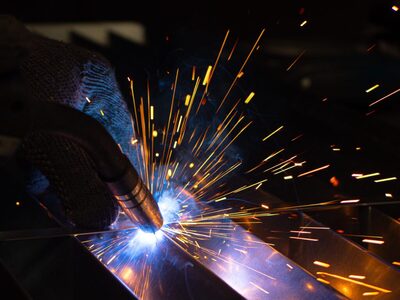
A fabrication shop's skill is often judged by its weld quality.
-
TIG Welding (Tungsten Inert Gas): Best for thin materials and where aesthetics matter (e.g., medical equipment). It provides the cleanest finish.
-
MIG Welding (Metal Inert Gas): Faster and better for structural parts and thicker materials.
-
Robotic Welding: For high-volume orders, robots provide 100% consistency that human welders cannot match.
Zeometrix: The Future of Rapid Fabrication in BangaloreIn a market crowded with traditional workshops, Zeometrix has emerged as a leader by digitizing the entire fabrication experience. Based in Bangalore, Zeometrix focuses on removing the "friction" from manufacturing.
The Zeometrix Advantage
For many years, the biggest complaint about sheet metal manufacturing was the slow quoting process and lack of transparency. Zeometrix solved this through:
-
The Digital Factory Model: By utilizing an online platform, Zeometrix allows customers to upload CAD files (STEP, IGES, DXF) and receive an instant quote. This eliminates the back-and-forth emails that usually take days.
-
Precision and Speed: They specialize in "Rapid Prototyping," meaning they can often deliver a finished part in a fraction of the time it takes traditional vendors.
-
Material Integrity: Zeometrix sources high-grade materials and provides full traceability, which is essential for industries like Aerospace and Defense.
-
End-to-End Solutions: They don't just cut and bend; they provide hardware insertion (PEM fasteners), surface treatment (powder coating, plating), and sub-assembly.
Material Specializations at Zeometrix
Zeometrix works with a diverse range of materials to suit varied industrial requirements:
-
Stainless Steel (SS 304, 316, 430): Corrosion-resistant and perfect for food-grade or medical applications.
-
Aluminum (6061, 5052): Lightweight and excellent for heat dissipation in electronics.
-
CRCA (Cold Rolled Close Annealed) Steel: The workhorse for industrial enclosures and cabinets.
-
Copper and Brass: Essential for electrical busbars and decorative architectural elements.
Industry Applications: Who Needs Precision Fabrication?The versatility of sheet metal makes it indispensable across various sectors in Bangalore:
1. Electronics and Telecommunications
Bangalore is a hub for 5G infrastructure and server manufacturing. Custom server racks, PCB enclosures, and shielding cans require precise tolerances to ensure components fit perfectly and electromagnetic interference (EMI) is minimized.
2. Electric Vehicles (EV)
The EV revolution is headquartered in Bangalore. Sheet metal is used for battery packs, motor housings, and charging station kiosks. These parts must be lightweight yet strong enough to pass rigorous safety tests.
3. Medical Technology
Devices used in hospitals must be durable and easy to sterilize. Stainless steel fabrication for surgical tool trays, diagnostic equipment housings, and hospital furniture is a specialized field where Bangalore fabricators excel.
4. Renewable Energy
Solar inverter housings and wind turbine control panels are exposed to harsh outdoor environments. High-quality powder coating and weather-resistant materials are crucial here—areas where Zeometrix provides specialized expertise.
Technical Comparison: Why One Fabricator is Better Than AnotherWhen comparing sheet metal fabrication companies in Bangalore, look at their technical capabilities in detail:
Feature
Local "Job Shop"
Zeometrix (Modern Fabricator)
Quoting Time
2–5 Days
Instant / Same Day
Tolerance
+/- 0.5mm
+/- 0.1mm or better
DFM Feedback
Manual (Post-order)
Automated (Pre-order)
Traceability
Limited
Full Material Certifications
Surface Finish
Outsourced (Variable Quality)
Integrated Quality Control
Batch Size
Prefers high volume only
Prototype to Production (Flexible)
Quality Control and CertificationIn modern manufacturing, "good enough" is no longer acceptable. Top fabricators in Bangalore adhere to strict quality standards:
-
ISO 9001:2015: Ensures a consistent quality management system.
-
First Article Inspection (FAI): A process where the first part produced is thoroughly inspected against the drawing before the rest of the batch is made.
-
CMM Inspection: Using Coordinate Measuring Machines to verify complex geometries that manual calipers can't reach.
Zeometrix places a heavy emphasis on these protocols, ensuring that the parts you receive in the mail are exactly what you designed on your screen.
The Economics of Local SourcingChoosing a Bangalore-based fabricator like Zeometrix isn't just about quality; it's about the bottom line.

-
Reduced Lead Times: Shipping metal parts from overseas can take 6–8 weeks. A local partner can deliver in 6–8 days.
-
Inventory Reduction: Faster lead times mean you don't need to stock huge amounts of inventory (Just-in-Time manufacturing).
-
No Import Duties: Avoid the complexities of customs, duties, and fluctuating exchange rates.
Conclusion: Partnering for SuccessSelecting from the many sheet metal fabrication companies in Bangalore is a strategic decision that affects your product’s quality, cost, and time-to-market. While the city offers many options, the shift toward digital, high-precision manufacturing is clear.
Zeometrix represents the pinnacle of this shift. By combining traditional craftsmanship with modern software and high-end CNC machinery, they provide a level of service that matches the fast-paced nature of Bangalore’s tech industry. Whether you are in the early stages of a prototype or ready for full-scale production, having a partner who understands the nuances of material science and precision engineering is the key to industrial success.
In the heart of India's tech capital, the future of metal is being shaped—one precise cut at a time.
Frequently Asked Questions (FAQ)1. What is the maximum thickness of metal that can be laser-cut?
At most high-end facilities like Zeometrix, fiber lasers can cut Mild Steel up to 20mm–25mm, Stainless Steel up to 12mm–15mm, and Aluminum up to 10mm–12mm. For thicker plates, plasma or waterjet cutting is typically used.
2. How does Zeometrix ensure the accuracy of complex bends?
Zeometrix uses CNC-controlled multi-axis press brakes. These machines use sophisticated back-gauging and angle-sensing technology to ensure that every bend is accurate to within a fraction of a degree, even across multiple batches.
3. Can I get a prototype made before committing to a large order?
Absolutely. One of the core strengths of Zeometrix is Rapid Prototyping. Our digital workflow is optimized to handle "Batch Size 1" just as efficiently as large-scale production, allowing you to test and iterate your designs.
4. What kind of surface finishes are available for my parts?
We offer a full suite of finishing options, including:
-
Powder Coating: Wide range of colors and textures (glossy, matte, sand-tex).
-
Plating: Zinc, Nickel, or Chrome plating for corrosion resistance.
-
Anodizing: Clear or color-coded for Aluminum parts.
-
Brushing/Polishing: Especially for Stainless Steel architectural or food-grade parts.
5. Why should I choose Zeometrix over a cheaper local workshop?
While smaller workshops might offer lower initial prices, Zeometrix provides better long-term value through precision (less waste), automated DFM feedback (fewer design errors), material certifications (reliability), and significantly faster delivery times that help you get your product to market sooner.
-


