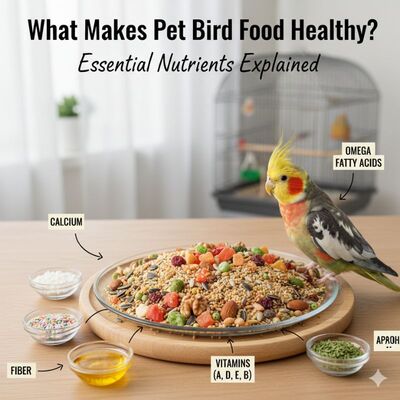
What Makes Pet Bird Food Healthy? Essential Nutrients Explained
-
Posted by Pet Care Filed in Other #pet bird food #food for pet birds #pet bird foods #bird pet food #pet birds food 6 views
Key Takeaways
- Healthy pet bird food provides balanced nutrition, not just seeds.
- Birds need a mix of proteins, vitamins, minerals, fats, and carbohydrates to thrive.
- Choosing the right food for pet birds improves immunity, feather quality, and lifespan.
- Variety is essential—no single option can meet all nutritional needs.
- Quality ingredients matter more than quantity when selecting pet bird foods.
Feeding birds properly is one of the most important responsibilities of a bird owner. Many health and behavioral issues in birds stem from poor diet choices. Understanding what makes pet bird food truly healthy helps ensure your bird lives a longer, happier, and more active life.
This guide breaks down the essential nutrients birds need, why they matter, and how to choose the best bird pet food for everyday feeding.
Why Nutrition Matters for Pet Birds
Unlike wild birds that naturally forage for diverse foods, pet birds depend entirely on their owners. Feeding low-quality or unbalanced pet birds food can lead to:
- Weak immunity
- Feather plucking
- Low energy levels
- Digestive problems
Healthy food for pet birds supports physical health, mental stimulation, and natural behavior.
Essential Nutrients in Healthy Pet Bird Food
1. Protein: For Growth and Repair
Protein is essential for muscle development, feather growth, and tissue repair. Birds need adequate protein during:
- Molting
- Growth stages
- Breeding periods
Sources of protein in pet bird foods include pellets, legumes, cooked eggs (in moderation), and sprouted seeds.
2. Vitamins: Supporting Overall Health
Vitamins are critical for metabolism, vision, and immunity.
- Vitamin A supports skin, feathers, and respiratory health
- Vitamin D3 helps with calcium absorption
- Vitamin E supports reproduction and immune function
A well-balanced bird pet food includes natural vitamin sources like fruits and vegetables.
3. Minerals: Strong Bones and Beaks
Minerals such as calcium and phosphorus are essential for:
- Bone strength
- Egg production
- Beak maintenance
Cuttlebones, mineral blocks, and fortified pet bird food help meet these needs.
4. Healthy Fats: Energy and Feather Quality
Fats provide concentrated energy and support healthy skin and feathers. However, excess fat can cause obesity.
Healthy fat sources in pet birds food include:
- Sunflower seeds (limited)
- Nuts (occasional treats)
Balanced food for pet birds contains controlled fat levels to avoid health risks.
5. Carbohydrates: Daily Energy Source
Carbohydrates provide energy for daily activity and movement.
Whole grains, seeds, and pellets commonly found in pet bird foods supply slow-releasing energy essential for active birds.
Importance of Variety in Bird Diets
No single bird pet food can provide complete nutrition. A healthy diet should include:
- High-quality pellets
- Fresh fruits and vegetables
- Limited seeds and treats
Rotating foods prevents nutrient deficiencies and keeps birds mentally engaged.
Ingredients to Avoid in Pet Bird Food
Not all products marketed as pet bird food are healthy. Avoid foods containing:
- Artificial colors
- Added sugars
- Excessive fillers
- Preservatives
Always read labels before choosing food for pet birds.
Final Thoughts
Healthy birds start with healthy nutrition. By choosing high-quality pet birds food and understanding essential nutrients, bird owners can prevent many common health issues. A well-planned diet made of balanced pet bird foods ensures better energy, stronger immunity, and vibrant feathers.
Feeding birds right is not complicated—it’s about making informed choices every day.
Frequently Asked Questions (FAQs)
1. What is the healthiest pet bird food?
The healthiest pet bird food includes balanced pellets, fresh fruits, vegetables, and limited seeds.
2. Can seeds alone be food for pet birds?
No, seeds alone lack essential vitamins and minerals and should not be the only bird pet food.
3. How often should pet birds be fed?
Most pet birds should be fed daily, with fresh food replaced every 24 hours.
4. Is homemade pet birds food safe?
Homemade food can be safe if properly balanced, but it should not replace complete pet bird foods.
5. Why do pet birds need variety in their food?
Variety prevents nutritional deficiencies and keeps birds physically and mentally healthy.


