
Categories
Tags
-
#fleet insurance
#RFP in Healthcare
#Retail Store Installation
#filler for wrinkles around the mouth
#A-frames
#Healthcare SEO
#Poland tour from Wieliczka
#employee handbook translation services
#Honeycomb Paper Bubble Wrap
#Business Law Attorneys
#Animal symbolism
#PDA in a Relationship
#Facial Lymphatic Drainage Massage
#Cloud video surveillance
#Tax deed
#Cloud ERP Solutions
#natural lip fillers
#allergies on skin
#ATA certified translator
#recruitment and selection process in HRM
#2D barcode scanners
Archives
Why Are Businesses Switching to 2D Barcode Scanners?
-
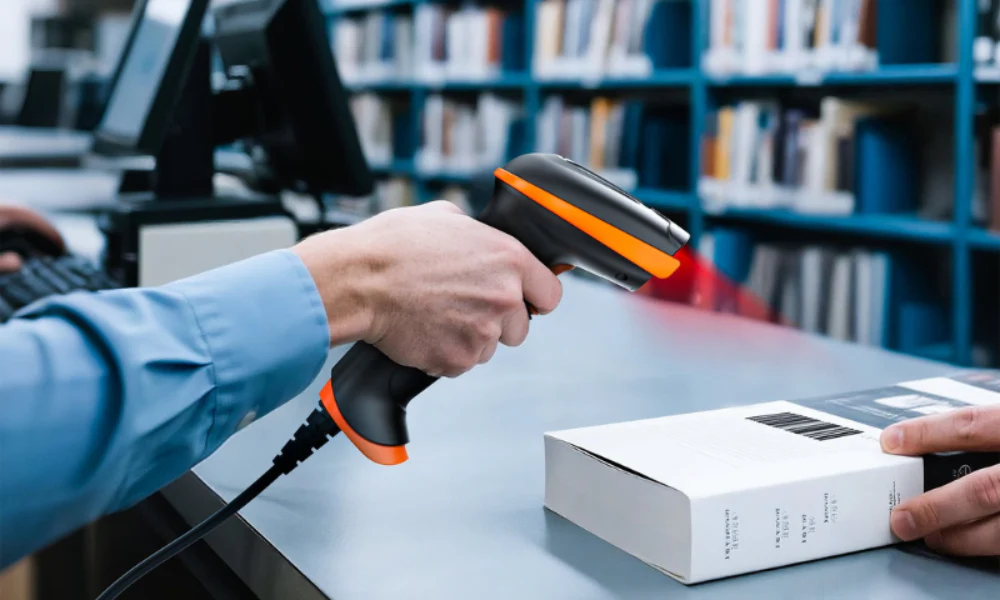
Businesses are switching to 2D barcode scanners. This is because they store data in space. They also improve durability, support compliance and enhance workflow speed. With error correction -angle scanning and system integration 2D barcode scanners deliver richer data. This leads to decision-making and future-ready operations. This happens across industries like healthcare, manufacturing, logistics and retail.
When you walk through a warehouse a hospital supply room or a production line you notice a detail. This detail provides information. The common single-line barcode shares its space with a code. This new code has a size and greater complexity. It also has capabilities. These codes belong to 2D barcode scanners. All businesses are implementing systems that use 2D barcode scanners to read these codes.
The reason for this development is that organizations need to change their systems. What causes organizations to discard their operating scanning equipment to acquire models? There are two possibilities. One is excitement. The other is revolutionary changes that exist beneath the surface. The analysis will show which factors cause operations to change their systems. It will also show which ones remain permanent after achieving their methods.
The World Has Become Complicated. 2d Barcode Scanners Had To Keep Up.
Tracking requirements from times required solutions. Products used identification numbers. Scanners could read these to create system entries. The current situation requires the item to have identification numbers. These include a number, batch number and expiration date. They also include manufacturing location and compliance data. All this must be connected to one label. A single line of code cannot contain all the information. 2D barcode scanners provide their functions. They enable users to store data types in compact storage areas. They also enable users to access information without needing to visit a database.
Space Matters More Than You Think.
Imagine labeling an instrument a microchip or a tiny electronic component. There’s room for a barcode.. What about one that holds detailed information? 2D codes solve that instantly. 2D barcode scanners store data vertically and horizontally. They fit where linear codes simply can’t. Even a label the size of a fingernail can hold information. This opens the door for tracking items. These items used to be practically invisible to systems. Small assets, individual parts, tools. Once you can label them you can track them. Once you can track them you can manage them. That’s a leap forward.
Damage Happens. 2d Barcode Scanners Expect It.
Warehouses aren’t places. Neither are factories, shipping yards or field service environments. Labels get scratched, smudged or partially torn. Traditional barcodes often fail. This happens the moment part of the line disappears. 2D barcode scanners are built differently. They include error correction. This means scanners can still read them even if part of the code is damaged. Think of it like a puzzle. You can still solve it when a few pieces are missing. Fewer failed scans mean interruptions. Fewer interruptions mean workflows.
Speed Isn’t About Scanning. It’s About Flow.
At glance scanning speed between 1D and 2D codes might seem similar. The real difference shows up in motion. Modern 2D barcode scanners can read codes from angles. They don’t need alignment. Workers don’t have to tilt packages or reposition devices. They simply scan. Sometimes they don’t even need to aim all. That small convenience adds up across thousands of scans per shift. Less adjustment, less hesitation, more rhythm. When workflows feel smooth productivity rises naturally.
One 2d Barcode Scanner Can Read Code Types.
Here’s something businesses love: flexibility. Most 2D barcode scanners can read both barcodes and 2D codes. That means companies don’t need devices for label types. One 2D barcode scanner handles everything. That versatility simplifies operations. There are device types to manage. Staff training is easier. Hardware costs are reduced over time. The transition from labels to new ones is seamless. Organizations can upgrade gradually. The 2D barcode scanner supports them through the transition.
Compliance Requirements Are Driving Adoption.
Regulations across industries are evolving. Healthcare, manufacturing, logistics and retail increasingly require traceability. Governments and standards organizations want visibility into product origins, movement and authenticity. 2D barcode scanners meet those requirements. They can encode data directly on the label. That makes verification faster and more reliable. This is especially true when internet access is limited or systems operate offline. In some cases companies aren’t switching because they want to. They’re switching because compliance demands it. Fortunately the operational benefits make the transition worthwhile.
Real-Time Decision Making Needs Data.
Businesses today run on analytics. Leaders want dashboards, forecasts, insights. That level of intelligence depends on data captured at every step. 2D barcode scanners provide data inputs than traditional scanning methods. More information captured per scan means systems can analyze trends effectively. This includes inventory turnover, product movement, maintenance cycles and more. The result is decisions made faster.
Customer Expectations Have Changed.
Think about how customers shop. They expect updates, precise tracking and accurate delivery windows. That level of service requires data flowing through supply chains in time. When companies rely on scanning systems that capture information they limit what they can promise customers. Upgrade the data capture process though. Suddenly everything improves. Order accuracy shipment visibility and response speed all improve. Customers may never see your 2D barcode scanners. They definitely notice the results.
Integration Turns 2d Barcode Scanners Into Strategy Tools.
A 2D barcode scanner alone doesn’t transform a business. Integration does. When scanning devices connect directly to enterprise platforms, inventory software, asset tracking systems, ERP environments the information captured at the point of scan instantly triggers updates across the organization. Inventory adjusts, alerts fire reports refresh, workflows move forward automatically. Technology providers like Lowry Solutions help organizations implement these connected ecosystems. They ensure scanning hardware works with enterprise systems than operating in isolation. That unified approach turns a scan into an advantage.
Training Time Drops Dramatically.
You might assume advanced 2D barcode scanners require training. Surprisingly the opposite is often true. 2D barcode scanners read codes from angles and distances. They’re easier for staff to use. Workers don’t need positioning or precise alignment. They just scan. Less training means onboarding. Faster onboarding means new employees become productive sooner. That matters a lot in industries with staffing or high turnover.
Future-Proofing Is A Consideration.
Businesses don’t upgrade technology for today. They upgrade for what’s coming. 2D barcode scanner adoption is accelerating across industries. This is especially true as global standards evolve toward data- labeling. Companies that stick exclusively with older scanning systems risk falling behind. Partners, suppliers or regulators may adopt formats. Switching early gives organizations breathing room. They can adapt gradually than scrambling later. Future-proofing isn’t flashy. It’s smart.
The Hidden Advantage Is Confidence.
When teams know their 2D barcode scanning system captures data reliably they stop checking everything. They trust the system. They move faster. They focus on their work of worrying about errors. Confidence doesn’t show up in spreadsheets. It affects performance every day.
Final Thoughts
Technology transitions require time. They need to develop their benefits before people will accept them. The current situation with 2D barcode scanners demonstrates this principle. Organizations make changes to their operations for two reasons. These include trends and the benefits that enhanced data, improved workflows and better system visibility bring to their work processes. Organizations find it impossible to return to their systems after they achieve implementation of their new technologies. Modern businesses need to advance their operations. They need to achieve speed, accuracy and insight. This leads to success. You can reach out to Lowry Solutions.
FAQs
1. What is the main advantage of 2D barcode scanners?
2D barcode scanners store information. This includes numbers, batch data and expiration dates within a small label.
2. Can 2D barcode scanners read barcodes?
Yes most 2D barcode scanners can read both 1D and 2D barcodes. This allows for system transitions.
3. Why are regulated industries adopting 2D barcode scanners?
They support traceability and compliance requirements. They encode complex product data directly on labels.
4. Are 2D barcode scanners durable, than 1D barcode scanners?
Yes built-in error correction allows them to remain readable. This is true even if they are partially damaged.
5. Do 2D barcode scanners improve productivity?
Yes they scan from angles. They reduce alignment time. They minimize errors. They create faster smoother workflows.


