Before signing a stone cutting machine contract, identify production drift risks—not just performance—to avoid costly surprises. Click here to visit Hotel Refrigerator
Before You Sign: The Questions That Actually Protect Stone Machine Buyers
-
January 12, 2026 6:02 AM PST
By the time a stone cutting machine purchase reaches the signing stage, most technical comparisons are already finished. Models have been shortlisted, prices discussed, and configurations confirmed.
What often remains unresolved is not performance, but risk.
The buyers who regret their decision later are rarely those who chose the wrong model. They are usually the ones who failed to identify where uncertainty would appear once the machine entered daily production.
This article does not list generic questions. It explains which questions actually protect buyers, and what kind of answers should raise concern before a contract is signed.
1. What Will Drift First in Daily Production?
This is the single most important pre-signing question — and the one most suppliers are least prepared to answer clearly.
A healthy answer includes:
• Which parameters tend to change during long shifts
• How early signs of drift are detected
• Whether drift is gradual or sudden
A risky answer sounds like:
• “It depends on the operator”
• “That usually doesn’t happen”
• “We’ll see after installation”
Drift is normal. Uncontrolled drift is expensive.
Buyers who study a detailed bridge saw buyer guide usually realize that long-term stability matters more than peak cutting performance shown during trials.
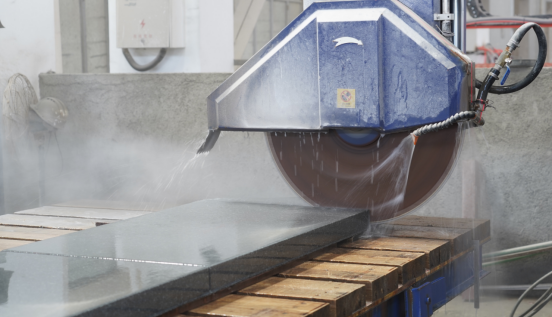
DINOSAW granite bridge saw
2. Which Adjustments Are Considered Normal?
Every machine requires adjustment. The difference is how often, and by whom.
Healthy systems:
• Have a small set of routine adjustments
• Rely on process, not individual experience
• Do not require constant fine-tuning to stay accurate
Warning signs include:
• Frequent manual compensation
• Heavy reliance on “experienced operators”
• No clear baseline for normal settings
If a machine depends on operator intuition to remain stable, operational risk has already been transferred to your workforce.
3. What Typically Wears First — and What Happens Next?
Wear parts are predictable. Surprises are not.
Before signing, buyers should insist on clarity around:
• Which components wear first under continuous use
• Whether wear affects accuracy gradually or abruptly
• How replacement impacts cutting consistency
Vague answers here usually translate into unplanned downtime later. Clear wear patterns allow buyers to plan maintenance instead of reacting to it.
4. How Are Problems Diagnosed When Output Starts to Decline?
Failures are rare. Performance decline is not.
Experienced buyers focus on diagnosis, not repair:
• What indicators are checked first
• Whether issues can be identified remotely
• How long root-cause analysis usually takes
Manufacturers like Dinosaw Machinery are often evaluated less on whether support exists, and more on whether the diagnostic process is structured and repeatable.
If diagnosis depends on trial-and-error, downtime becomes inevitable.
5. What Changes After the First Few Months?
Initial performance means very little.
A useful answer describes:
• Which parameters typically drift after stabilization
• How maintenance routines evolve over time
• Whether output consistency improves or degrades
Suppliers who can only describe day-one performance usually have limited insight into long-term operation.
6. Which Assumptions Should We Be Careful About?
This question tests alignment.
Healthy answers openly address:
• Overestimated automation benefits
• Underestimated learning curves
• Differences between trial cutting and production reality
Defensive or overly optimistic responses often signal future friction.
The Final Check Before Signing
Before signing, experienced buyers usually make one last assessment:
Does this machine reduce uncertainty, or does it postpone it?
For bridge saw for stone applications, the best choice is rarely the one with the most features, but the one with the most predictable behavior under pressure.
Signing a contract does not end the decision. It commits you to how uncertainty will be managed for years to come.
The right questions do not guarantee a perfect machine. They ensure that risks are visible, understood, and priced correctly — before production makes them expensive.
February 14, 2026 9:31 AM PSTAchieve precise chamfering results with adjustable control mechanisms that allow refined finishing and consistent edge detailing. ladglass.com
March 1, 2026 6:27 PM PST


