Post-Event Surveys That Drive Future Success
-
Post-Event Surveys That Drive Future Success: A Blueprint for B2C Marketing Managers
Boost your B2C event success with post-event surveys. Learn how to design engaging questionnaires, analyze attendee feedback using MindProbe’s AI tools, and apply insights for future wins. 1. Introduction
In an increasingly experience-driven market, events be they conferences, expos, product launches, or webinars serve as powerful engagement platforms for B2C marketing managers. These gatherings not only build brand awareness but also foster direct connections with consumers, partners, and influencers. However, hosting an event is just the beginning; the real question is how to make the next one even better. That’s where post-event surveys come in.
A well-designedpost-event surveycaptures immediate, unfiltered attendee feedback, providing insight into what worked, what didn’t, and what attendees hope to see next time. Armed with these findings, B2C marketing managers can refine event strategies, ensure better ROI, and strengthen customer relationships. Yet, crafting an effective post-event survey can be more challenging than it seems ask too many questions, and you risk survey fatigue; ask the wrong ones, and you’ll glean little value.
In this extensive guide, we’ll explore why post-event surveys are essential for B2C success, examine best practices for designing and distributing them, and show how tools like MindProbe, an AI-powered market research platform, can streamline the entire process. From auto-tagging open-ended responses to providingreal-time analytics, MindProbe takes the guesswork out of post-event feedback collection. Ready to learn how to transform your next event into an even bigger success? Let’s dive in.
2. Why Post-Event Surveys Are Critical
Events are a significant investment of time, money, and resources whether you’re hosting a small product demo or a massive consumer expo. Post-event surveys help you:
1. Gauge Satisfaction
-
Measure how satisfied attendees were with the event’s organization, content, speakers, venue, and more.
2. Validate Objectives
-
Did your event meet the goals you set out be it lead generation, brand awareness, or customer retention? Post-event feedback offers a direct line to how attendees perceived its success.
3. Uncover Improvement Areas
-
Perhaps the sign-up process was confusing, or the catering options lacked variety. Honest feedback highlights areas for quick fixes or larger overhauls.
4. Generate Future Content Ideas
-
Attendees often share what topics they’d like to learn more about or which speakers they’d love to see again. This feeds into your event roadmap, ensuring your next initiative resonates even more with your target audience.
5. Build Attendee Loyalty
-
Asking for feedback shows you value the attendee experience. When you implement changes based on their input, you foster a sense of collaboration and loyalty that can influence repeat attendance.
By systematically collecting and acting on post-event feedback, you extend the life cycle of the event and continually enhance your brand’s reputation as a customer-centric player in the B2C realm.
3. Key Components of an Effective Post-Event Survey
While post-event surveys can take various forms email, SMS, in-app pop-up the best ones tend to share certain core elements:
1. Clear, Focused Questions
-
Avoid extraneous inquiries that drift away from the event context. Each question should tie back to your event’s objectives.
2. Logical Flow
-
Group similar questions together. Ask about logistics (e.g., location, sign-up process) in one section, then move to content (speakers, workshops), etc.
3. Mixed Question Formats
-
Leverage a mix of multiple-choice, rating scales (1-5 or 1-10), and open-ended prompts. This offers both quantitative data (easy to compare across events) and qualitative insights (uncovering hidden issues or praises).
4. Conciseness
-
Keep it brief. Survey fatigue is real 10 questions or fewer is often the sweet spot to ensure completion.
5. Opportunity for Additional Comments
-
Let respondents elaborate on anything not covered by the preset questions. You’d be surprised how many actionable insights come from an optional final question, like: “Any other feedback or suggestions?”
6. Call-to-Action
-
If relevant, direct respondents to a next step, such as a discount for your next event or an invitation to subscribe to your newsletter.
4. Designing Engaging Post-Event Surveys
Before writing a single question, pinpoint your survey goals. Are you trying to measure overall satisfaction, gauge the success of a new event format, or identify trending topics for future sessions? Defining your objectives helps you draft purpose-driven questions that yield actionable data.
4.2 Craft Relevant and Concise Questions
A frequent mistake is to overload a survey with questions. While you might want to know everything, attendees have limited patience.
-
Prioritize the must-have questions, and consider saving secondary topics for a follow-up survey or other research channels.
-
Use simple language and avoid jargon attendees shouldn’t need an advanced degree to understand what you’re asking.
4.3 Incorporate Varied Question Formats
To keep respondents engaged:
-
Rating Scales (e.g., 1–5 or 1–10) for quick sentiment checks on aspects like speaker quality or venue convenience.
-
Multiple-Choice for easily comparable data, such as satisfaction with specific sessions.
-
Open-Ended to capture raw, unfiltered comments about unexpected pain points or unique suggestions.
4.4 Timing and Distribution
The best time to distribute a post-event survey is typically within 24–72 hours after the event. Attendee memories are fresh, yet they’ve had enough time to reflect on their experience. Also, choose distribution channels wisely: email for formal events, push notifications or QR codes onsite for quicker, more casual gatherings, or direct in-app prompts if you used an event app.
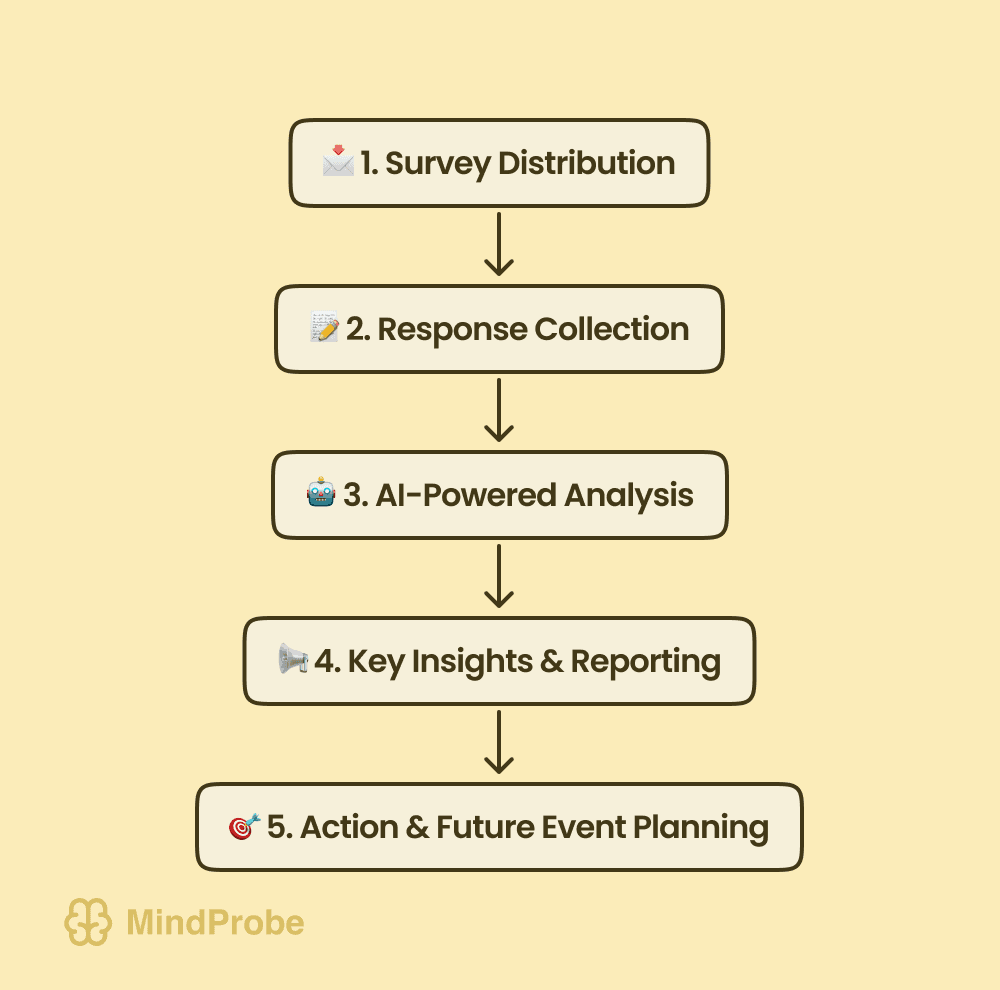
5. Leveraging MindProbe for Post-Event Analysis
While designing and distributing an engaging post-event survey sets the stage, extracting actionable insights is where the magic really happens. MindProbe, an AI-powered market research platform, simplifies the entire feedback process, from sentiment analysis to dashboarding.
5.1 AI-Powered Sentiment Analysis
Manually sifting through hundreds or thousands of open-ended comments can be daunting. MindProbe’s AI algorithms automatically categorize feedback as positive, negative, or neutral, highlighting emotional triggers or repeated themes (e.g., “parking issues,” “amazing keynote,” “overcrowded breakout sessions”).
5.2 Auto-Tagging of Responses
Beyond high-level sentiment, MindProbe can auto-tag frequently mentioned phrases or keywords. If multiple attendees mention “logistics,” “networking,” or “food options,” these tags quickly illuminate which areas garnered the most attention, be it praise or complaints.
5.3 Real-Time Analytics Dashboard
Why wait until your entire audience has responded to glean insights? MindProbe’s real-time dashboard updates as feedback arrives. Spot emerging trends or potential crises early like if 30% of respondents so far mention “too few restrooms” and act immediately to gather more context or address the issue in your post-event communication.
5.4 7-Day Trial, No Free Subscriptions
Unlike some platforms that offer limited free tiers, MindProbe provides a 7-day full-featured trial so you can test its advanced analytics, branching logic, and auto-tagging capabilities. After this trial period, you move to a paid plan ensuring you always have premium features at your disposal for mission-critical feedback campaigns.
6. Overcoming Common Pitfalls in Post-Event Surveys
Even the most well-intentioned post-event survey can falter if you stumble into classic traps. Below are frequent issues and tips for evading them.
6.1 Survey Fatigue
-
Symptom: Attendees drop out halfway or ignore the survey altogether.
-
Prevention: Limit your survey to 10 questions or fewer, and ensure each one has a clear purpose. If you need more data, consider a second, optional follow-up or a one-question “pulse check.”
6.2 Biased or Leading Questions
-
Symptom: Results get skewed because your questions nudge respondents towards positive or negative answers.
-
Prevention: Write questions neutrally. Instead of “Wasn’t our venue amazing?” try “How would you rate the venue?”
6.3 Low Response Rates
-
Symptom: You send out a post-event survey, but only a fraction of attendees engage.
-
Prevention: Use timely distribution methods (like an immediate post-event email), highlight the value of their feedback, and consider offering a small incentive (e.g., a discount on future events or exclusive early bird tickets).
7. Analyzing Your Data for Actionable Insights
Collecting feedback is just the start. How you dissect this data determines if you’ll make meaningful improvements.
7.1 Segmenting Feedback by Audience
Breaking down responses by categories first-time attendees vs. returning visitors, VIP ticket holders vs. standard pass holders provides granular insights. You might find that newbies want more orientation materials, while veterans crave advanced sessions and networking perks.
7.2 Identifying Key Themes and Trends
Use a text analytics or auto-tagging feature (like MindProbe’s) to spot recurring motifs. If 20% mention “uncomfortable seating,” that’s a red flag; if 35% rave about the “after-party,” that’s a success story you should build upon or replicate at future events.
7.3 Turning Insights into Strategy
The ultimate goal is action. Armed with your post-event data, you should:
-
Address Pain Points: If many attendees criticize the sign-up process, you can invest in a more user-friendly platform next time.
-
Amplify the Positives: If your keynote speaker was a huge hit, consider inviting them back or featuring them in your post-event marketing.
-
Set Measurable Goals for Next Event: For instance, aim to raise average satisfaction from 7.5/10 to 8.5/10 by improving specific areas.
8. Real-World Examples of Successful Post-Event Surveys
8.1 B2C Product Launch Events
Scenario: A tech company unveils its latest smartphone in an exclusive showcase.
-
Survey Focus: Attendee impressions of the product’s features, event’s staging, and clarity of the brand message.
-
Impact: The survey revealed that attendees loved the phone’s camera but felt the demonstration area was overcrowded. Armed with this feedback, the company improved crowd flow and added more demo stations for future product launches.
8.2 Large-Scale Conferences and Expos
Scenario: An annual consumer electronics expo draws thousands of visitors.
-
Survey Focus: Registration process, speaker lineup, exhibit hall layout, and on-site facilities (food, restrooms, signage).
-
Impact: Data analysis highlighted that first-time visitors were often overwhelmed, leading to the introduction of guided tours and better signage. The next year saw a 15% improvement in newcomer satisfaction scores.
8.3 Virtual Events and Webinars
Scenario: A brand transitions a previously physical seminar into an online webinar.
-
Survey Focus: Technical aspects (streaming quality, user interface), content relevance, speaker engagement, and post-webinar resources.
-
Impact: Feedback showed that attendees desired smaller break-out rooms for Q&A. Adapting the webinar platform to include these smaller sessions boosted overall satisfaction by 20% in subsequent events.
9. Measuring ROI and Demonstrating Value
Event budgets can be significant. Post-event surveys help you quantify success, which is crucial for securing future funding and proving the event’s impact. Common metrics include:
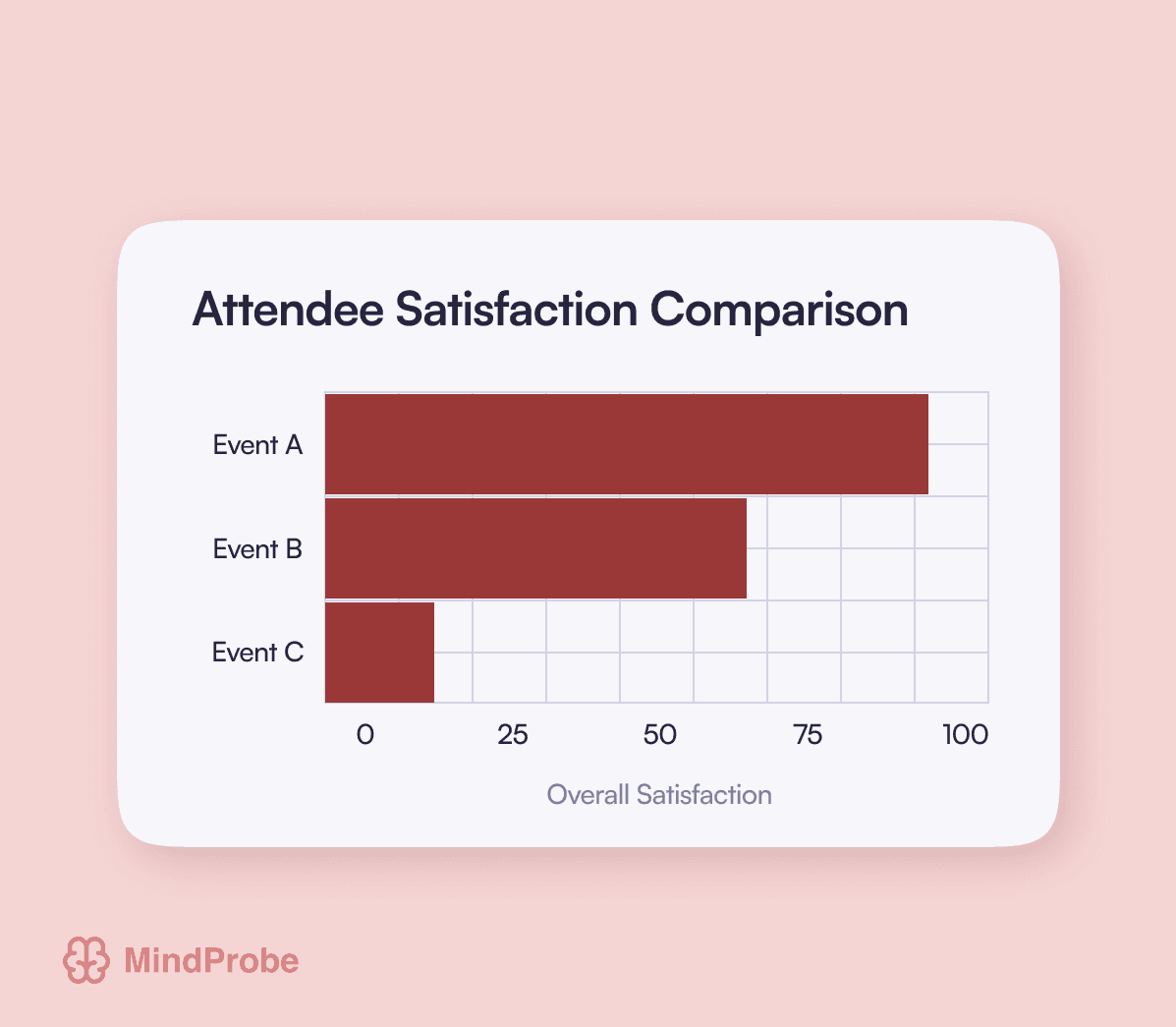
1. Satisfaction Scores: e.g., average rating on a 1–10 scale for overall experience.
2. Net Promoter Score (NPS): Gauges how likely attendees are to recommend your event to others.
3. Lead Generation: How many qualified leads can you trace back to the event?
4. Social Media Mentions: Did the event spark positive chatter or user-generated content?
5. Repeat Attendance: If you host recurring events, measure how many attendees return year after year.
By linking survey feedback to these metrics, you can show upper management or stakeholders a clear line from attendee satisfaction to business outcomes, making a compelling case for ongoing event investment.
10. Future-Proofing Your Post-Event Survey Strategy
Consumer expectations evolve alongside technology. To ensure your post-event surveys stay relevant and efficient:
1. Integrate Surveys with Event Apps
-
If you use an official event app, embed short surveys or quick polls to capture on-the-spot reactions.
2. Leverage QR Codes
-
For in-person events, place QR codes on signage or in the attendee guide, linking directly to the feedback form.
3. Adopt AI and Automation
-
Platforms like MindProbe can pre-emptively analyze sentiment and highlight red flags, enabling you to address issues promptly.
4. Consider Multi-Touch Feedback
-
Instead of a single, all-encompassing survey, distribute micro-surveys throughout the event cycle pre, mid, and post to capture a more nuanced timeline of attendee sentiment.
5. Keep a 360-Degree View
-
Combine survey feedback with data from social media, website analytics, and direct customer support queries to form a comprehensive event performance narrative.
11. Conclusion
Post-event surveysare far more than a checkbox at the end of a marketing checklist; they’re a strategic tool for continuous improvement. By capturing raw attendee impressions, you gain unfiltered insights into the facets of your event that resonate and those that fall short. Whether you’re launching a new product, hosting a large-scale expo, or running a virtual seminar, well-crafted surveys can make the difference between repeating the same mistakes and innovating toward a seamless, attendee-focused experience.
Yet, these benefits hinge on your ability to collect, interpret, and act on data effectively. That’s why tools like MindProbe can be game-changers, offering AI-powered sentiment analysis, auto-tagging for open-ended responses, and real-time dashboards. With a 7-day trial, you can test this platform’s premium features without limitations and see how refined, data-driven feedback loops enhance your B2C event strategy.
To truly drive future success, remember these guiding principles: ask targeted, relevant questions, respect your attendees’ time (avoid lengthy, convoluted forms), and follow up with changes that show you listened. In doing so, each event you host becomes not just a moment in time, but a stepping stone toward deeper customer loyalty, brand advocacy, and ongoing marketing success.
-


