Trastuzumab Botidotin: The Next Evolution of HER2-Targeted Ther
-
As precision oncology continues to evolve, HER2 (human epidermal growth factor receptor 2) has become one of the most established and clinically valuable therapeutic targets across a broad spectrum of solid tumors. With increasing insight into tumor heterogeneity and mechanisms of treatment resistance, the limitations of single-target, single-mechanism approaches have become more evident. As a result, enhancing therapeutic efficacy while delaying or overcoming resistance has emerged as a central objective in the ongoing advancement of HER2-targeted therapies.
Trastuzumab botidotin was developed in response to this unmet clinical need. As a next-generation HER2-targeted antibody, it introduces an innovative dual-epitope synergistic design, opening new possibilities for the treatment of HER2-positive malignancies.
Innovative Mechanism: Dual Binding for Enhanced HER2 Signal Suppression
Trastuzumab botidotin is a bispecific antibody targeting HER2, designed to simultaneously bind two distinct epitopes on the HER2 receptor. Unlike conventional monoclonal antibodies that interact with a single binding site, this dual-epitope strategy confers several key advantages:
-
More comprehensive inhibition of HER2-driven signaling pathways
-
Enhanced receptor internalization and degradation, resulting in reduced HER2 expression on the tumor cell surface
-
More effective suppression of tumor cell proliferation signals
-
Strengthened antibody-dependent cellular cytotoxicity (ADCC)
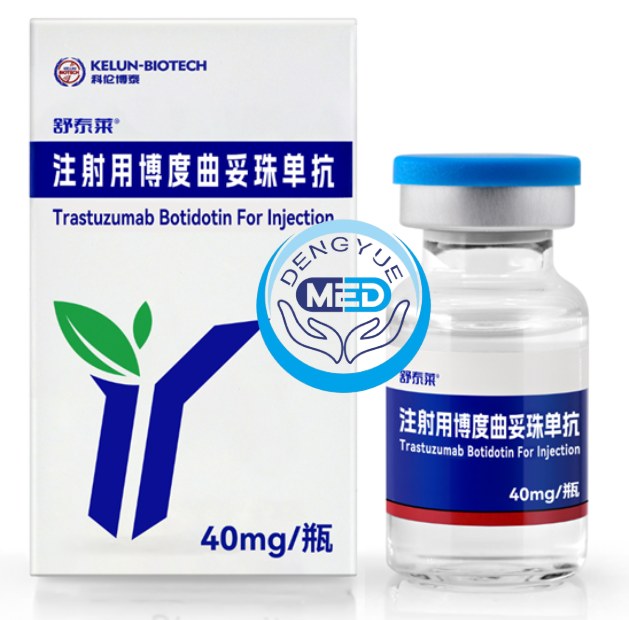
Through this synergistic mechanism, Trastuzumab botidotin enables more stable and sustained HER2 inhibition within the complex tumor microenvironment. It also offers a promising therapeutic option for patients who exhibit limited or diminishing responses to prior HER2 monoclonal antibody therapies.
Clinical Development: Broad Potential Across HER2-Positive Tumors
Clinical studies to date suggest that Trastuzumab botidotin demonstrates encouraging antitumor activity across a range of HER2-expressing or HER2-amplified malignancies, with particular focus on:
-
HER2-positive gastric cancer and gastroesophageal junction cancer
-
HER2-positive breast cancer
-
Other HER2-driven solid tumors
Notably, clinically meaningful efficacy signals have been observed in patients previously treated with HER2-targeted agents, indicating potential value in later-line or post-resistance treatment settings. Ongoing research continues to explore its role across different lines of therapy and in various combination strategies.
Safety Profile: Predictable, Manageable, and Clinically Feasible
Available clinical data indicate that Trastuzumab botidotin has a well-defined and predictable safety profile. The adverse events observed are generally consistent with those reported for HER2-targeted antibody therapies, most commonly including gastrointestinal symptoms and infusion-related reactions.
The majority of these events are mild to moderate in severity and manageable with standard monitoring and supportive care, supporting its feasibility for long-term use and for incorporation into combination-based treatment strategies.
Redefining the HER2 Treatment Landscape: From Single-Site Blockade to Precision Synergy
The development and clinical advancement of Trastuzumab botidotin reflect an important evolution in HER2-targeted therapy—from early single-antibody, single-site inhibition toward multi-epitope, multi-mechanism synergistic targeting.
This approach not only enhances antitumor activity but also offers new tools to address tumor heterogeneity and delay the development of resistance, contributing to the continued refinement and expansion of HER2 treatment paradigms.
Conclusion: Expanding Therapeutic Possibilities for HER2-Positive Patients
As precision medicine continues to advance, HER2-targeted therapy has progressed beyond the question of availability toward the optimization of treatment strategies. Through its innovative dual-epitope design, Trastuzumab botidotin introduces a new technical pathway and clinical perspective for the management of HER2-positive cancers.
With the continued accumulation of clinical trial data and real-world experience, Trastuzumab botidotin is expected to establish a clearer and more impactful role within the HER2 treatment landscape—offering patients extended survival and improved therapeutic options. Meanwhile, global pharmaceutical distributor DengyueMed remains committed to bringing innovative Chinese medicines to patients worldwide.
-


