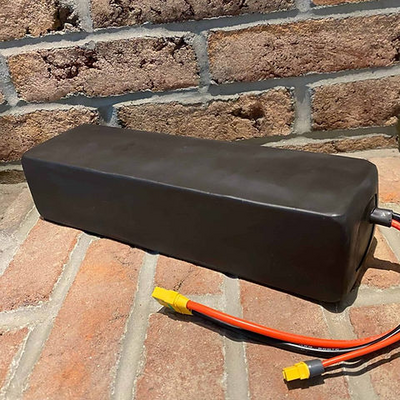
The Future of High-Voltage EV Bikes and Where the 72V EV bike b
-
Electric bikes are no longer confined to low-power urban commuting. Globally, the industry is shifting toward high-voltage platforms that deliver stronger acceleration, higher cruising speeds, and improved system efficiency. At the center of this shift is the 72V EV bike battery, a configuration that marks a clear transition from entry-level electric mobility to performance-driven engineering. This evolution is not driven by hype; it is grounded in high-voltage EV powertrain architecture, which enables designers to extract more usable energy while reducing electrical stress across the system.
As high-voltage platforms mature, understanding where 72V systems truly fit is essential for manufacturers, fleet operators, and serious riders alike.
Why High-Voltage EV Bikes Are Gaining Momentum
The push toward high voltage is rooted in physics, not marketing. Higher voltage allows the same power output at lower current, which reduces resistive losses and heat generation. For a 72V EV bike battery, this means cleaner power delivery, improved controller efficiency, and reduced strain on wiring and connectors.
From a rider’s perspective, the benefits are immediate: faster throttle response, stronger hill-climbing capability, and sustained performance at higher speeds. From an engineering standpoint, high-voltage systems unlock design flexibility that low-voltage platforms simply cannot offer. These advantages explain why performance-focused EV bikes are increasingly standardized around 72V architectures.
Where the 72V EV bike battery Fits in Modern Design Strategy
High-voltage systems are not for every use case, but they play a critical role in specific segments. Performance commuters, long-distance riders, and commercial applications with heavy payloads benefit most from a 72V EV bike battery because it maintains efficiency under sustained load.
Manufacturers also favor 72V platforms when designing premium models. The higher voltage supports advanced motor controllers, improved regenerative braking control, and more precise torque mapping. At Hybridev Engineering, these systems are evaluated not just for peak output, but for long-term stability under real-world riding conditions.
Chemistry Choices and the Rise of LiFePO4 at 72V
As voltage increases, battery chemistry becomes even more important. Safety, thermal stability, and cycle life all come under greater scrutiny. This is where LiFePO4 chemistry enters the conversation. Demand is rising for the 72V LiFePO4 electric bike battery replacement Pakistan segment because LiFePO4 offers superior thermal stability and predictable aging at high voltages.
While energy density is slightly lower than some lithium-ion alternatives, LiFePO4 chemistry compensates with longer cycle life and reduced risk of thermal runaway. For high-voltage systems operating in challenging climates, these traits are not optional—they are strategic.
Thermal Management and Structural Demands
High-voltage systems concentrate energy, which makes thermal management non-negotiable. A 72V EV bike battery must dissipate heat efficiently to preserve cell integrity and maintain consistent performance. Poor enclosure design or inadequate airflow can negate the benefits of higher voltage by accelerating degradation.
Structural integrity also matters more at 72V. Vibration, mechanical shock, and connector fatigue all scale with power output. This is why engineers increasingly treat battery packs as structural components rather than simple energy containers. The growing adoption of 72V LiFePO4 electric bike battery replacement Pakistan solutions reflects this mindset, as LiFePO4 cells tolerate mechanical stress more gracefully.
BMS Intelligence and High-Voltage Control
Battery management systems face greater challenges at higher voltages. Cell balancing accuracy, fault detection, and state-of-charge estimation all become more complex. In the middle of this discussion, it is essential to highlight advanced battery safety management systems, which are now designed specifically to handle high-series configurations.
A well-calibrated BMS protects a 72V EV bike battery from overvoltage events, thermal excursions, and imbalance drift. Without this intelligence, high-voltage platforms quickly lose their reliability advantage. This is one reason experienced engineers prioritize BMS capability as much as cell quality.
Regional Adoption and Replacement Trends
In emerging EV markets, replacement demand tells a clear story. The growth of the 72V LiFePO4 electric bike battery replacement Pakistan market reflects a broader global trend: users are upgrading from aging lithium-ion packs to safer, longer-lasting alternatives. High-voltage EV bikes place heavy demands on batteries, and riders are increasingly willing to invest in replacements that deliver durability rather than short-term performance.
This replacement cycle also reveals an important truth. High-voltage systems expose weak engineering faster. Packs with poor balancing logic, inadequate thermal design, or mismatched chargers fail early, while well-engineered systems thrive.
The Long-Term Role of 72V in EV Bike Evolution
Looking ahead, the 72V EV bike battery represents a ceiling for mass-market EV bikes rather than an endpoint. It offers a practical balance between performance and manageability without crossing into regulatory or infrastructure complexity associated with even higher voltages.
For manufacturers and system integrators, the lesson is clear: success at 72V depends on holistic design. Battery chemistry, charging logic, thermal control, and mechanical integration must work together. This is where experienced engineering partners make the difference.
At Hybridev Engineering, high-voltage platforms are approached with this systems-level mindset, ensuring that performance gains do not come at the expense of reliability or user trust.


